Why Historic Porches Fail — And How to Rebuild Them Correctly
Historic porches are one of the most beautiful features of older homes in Lambertville, Stockton, and throughout Hunterdon County. They were built with craftsmanship, proportion, and detail that’s hard to replicate today.
But here’s the truth:
Most historic porches don’t fail because they’re old.
They fail because of water, poor repairs, and modern shortcuts.
If your porch feels spongy, columns look soft at the bottom, or the railings are starting to wobble, this article will help you understand what’s really happening — and how to fix it the right way.
The Real Reasons Historic Porches Fail
1. Water Intrusion at the Base of Columns
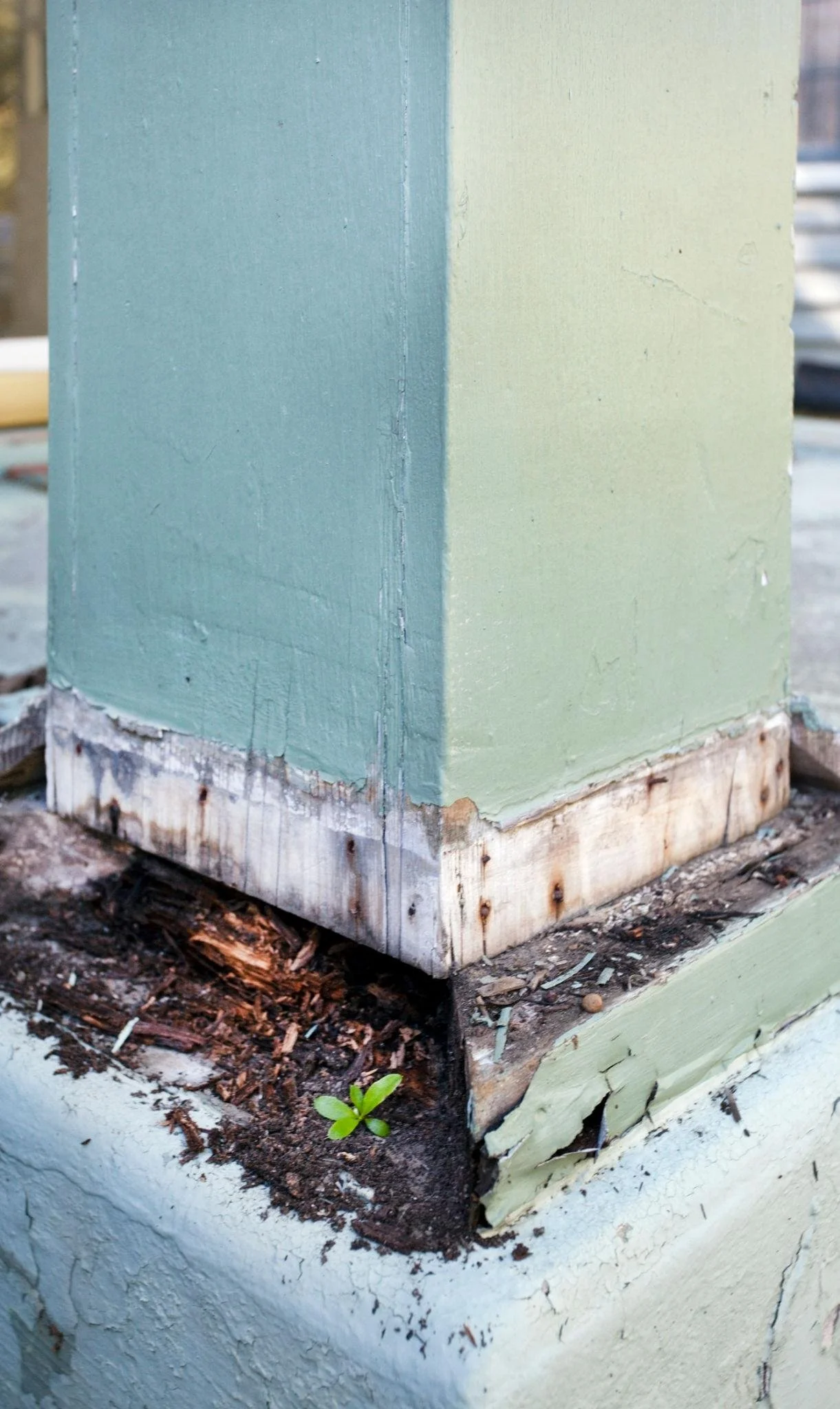
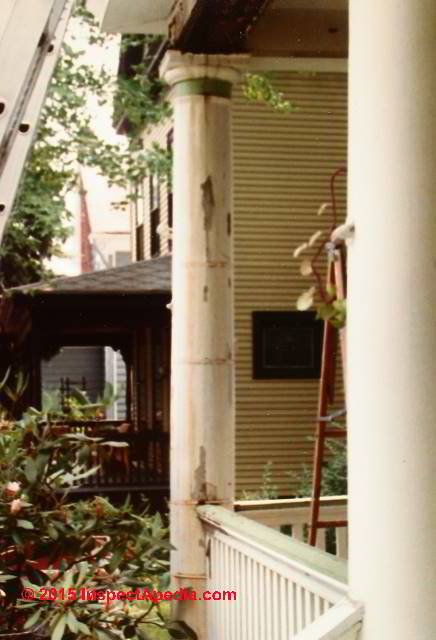
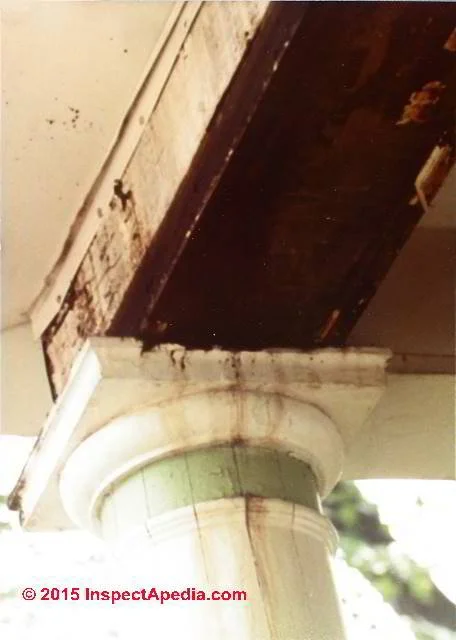
The number one failure point on historic porches is where wood columns meet the porch floor.
Older homes were built with solid wood columns. Over time:
Paint fails
Caulking cracks
Water pools at the base
End grain absorbs moisture like a sponge
Once rot starts, it spreads upward.
Common mistake: Wrapping the bottom in PVC or aluminum without addressing the underlying rot. That just traps moisture inside.
Correct solution:
Remove all compromised material
Address flashing and water shedding
Install proper column bases or plinth blocks
Prime and seal all end grain before installation
2. Porch Decking That Doesn’t Drain Properly
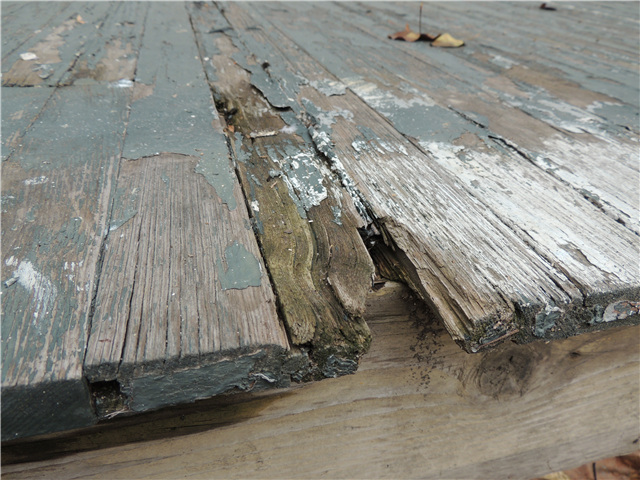
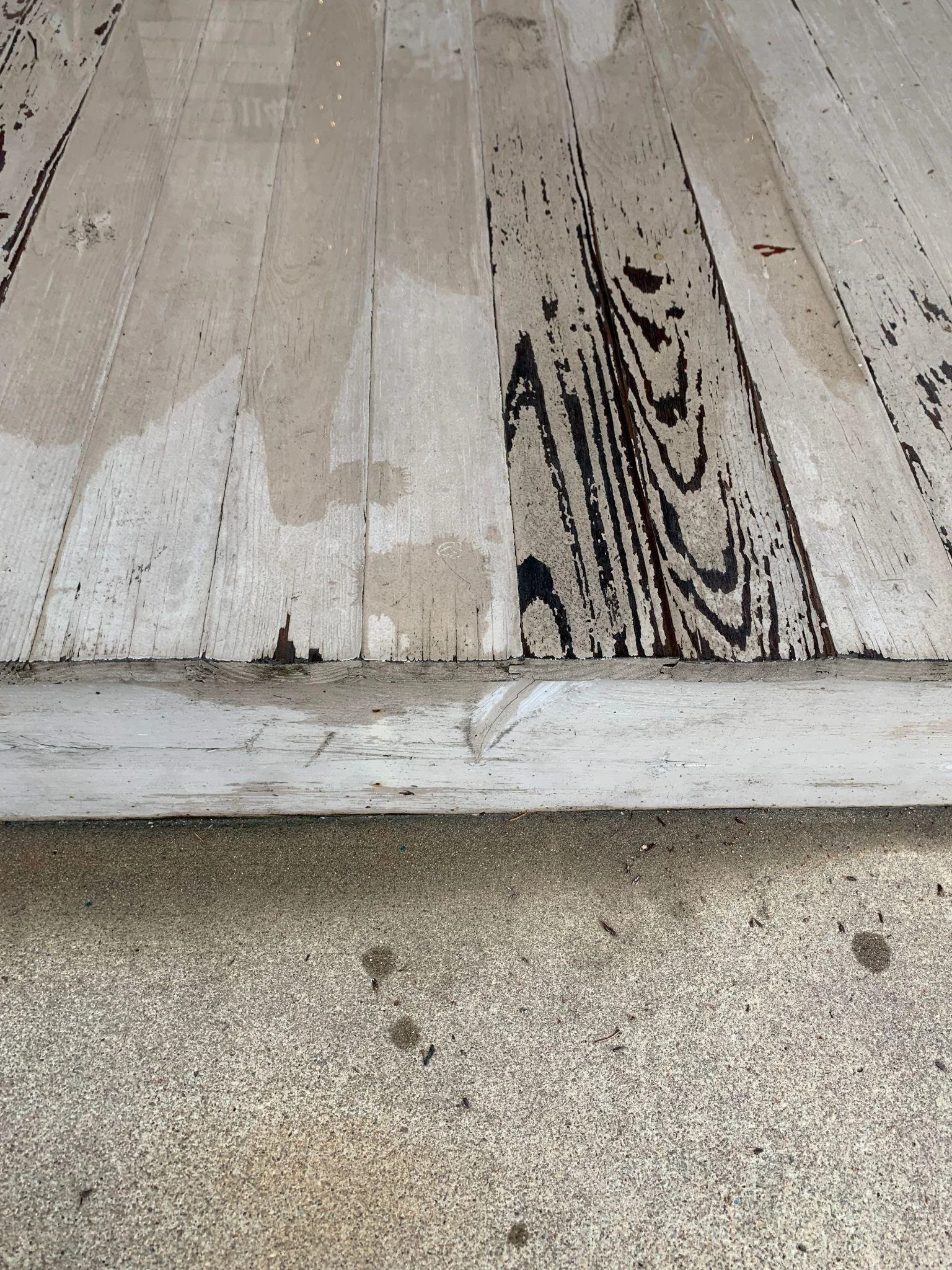
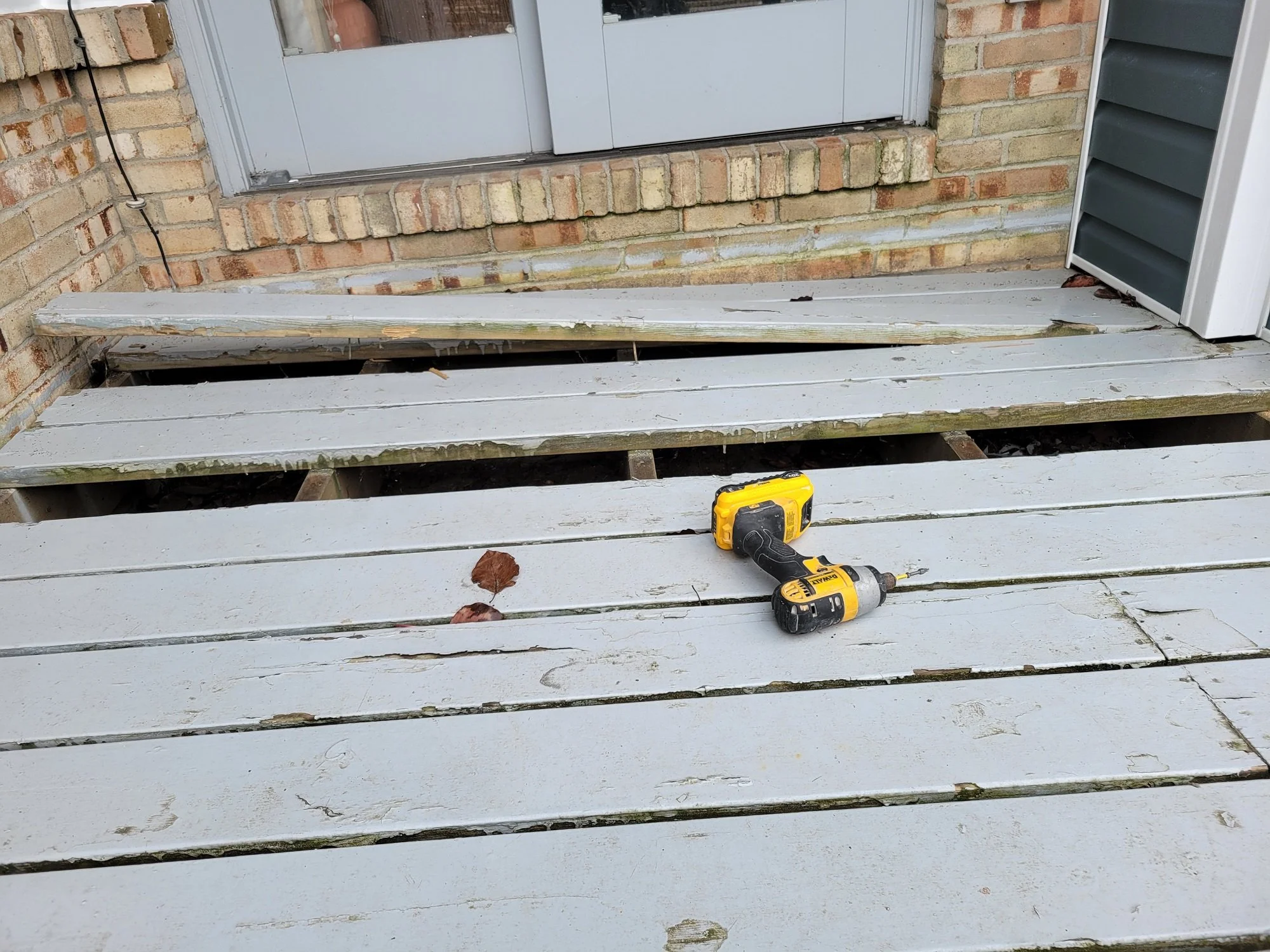
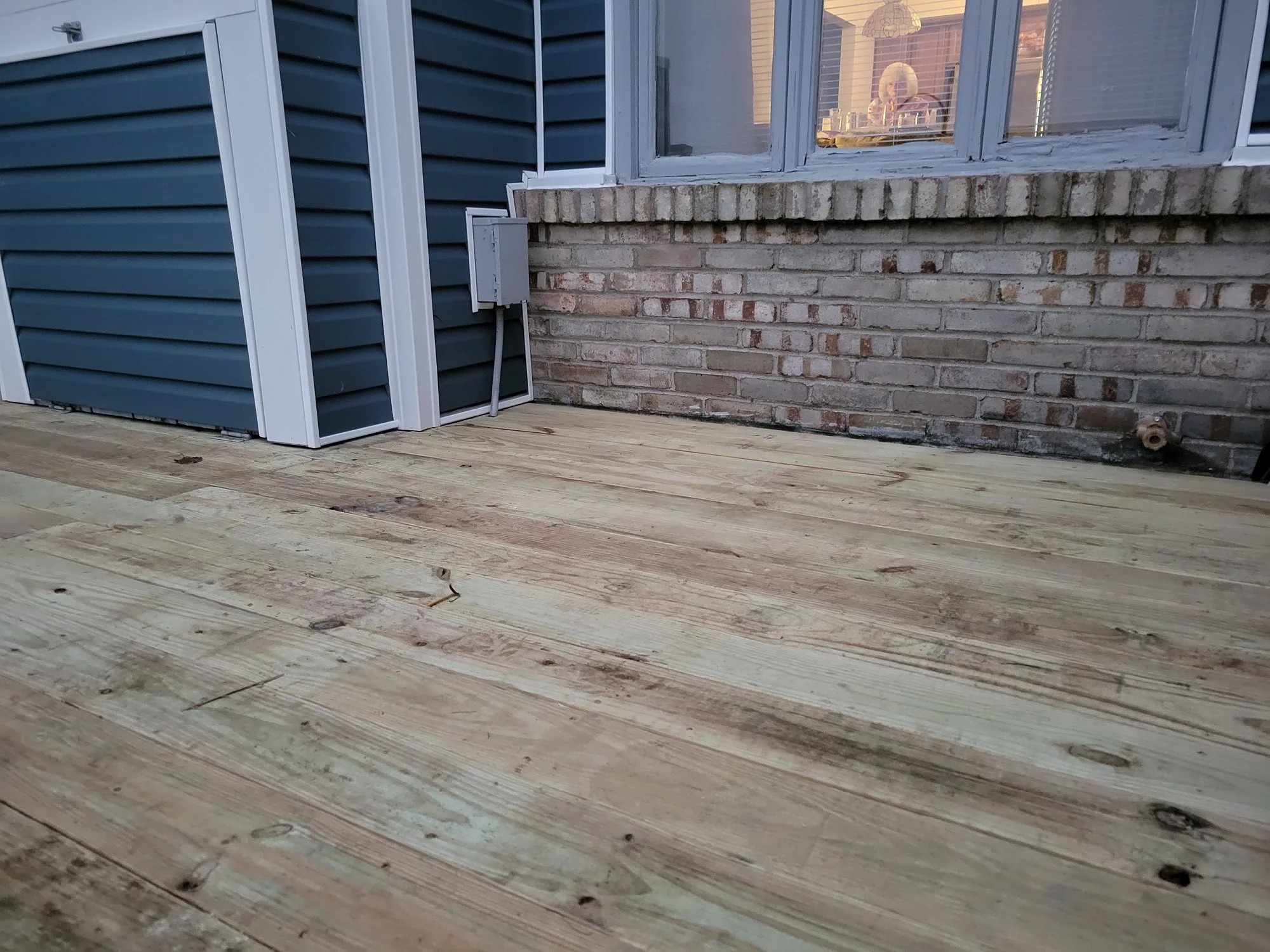
Many historic porches used tongue-and-groove fir flooring. It’s beautiful — but it must shed water correctly.
Failure happens when:
Porch floors are installed flat instead of sloped
Paint layers trap moisture
Gaps are sealed incorrectly
Skirting prevents airflow underneath
Without proper drainage and ventilation, the floor rots from the underside first.
Correct rebuild approach:
Ensure proper slope away from the house
Allow ventilation below the porch
Use appropriate porch-rated materials
Prime all sides of boards before installation
3. Inadequate Structural Support
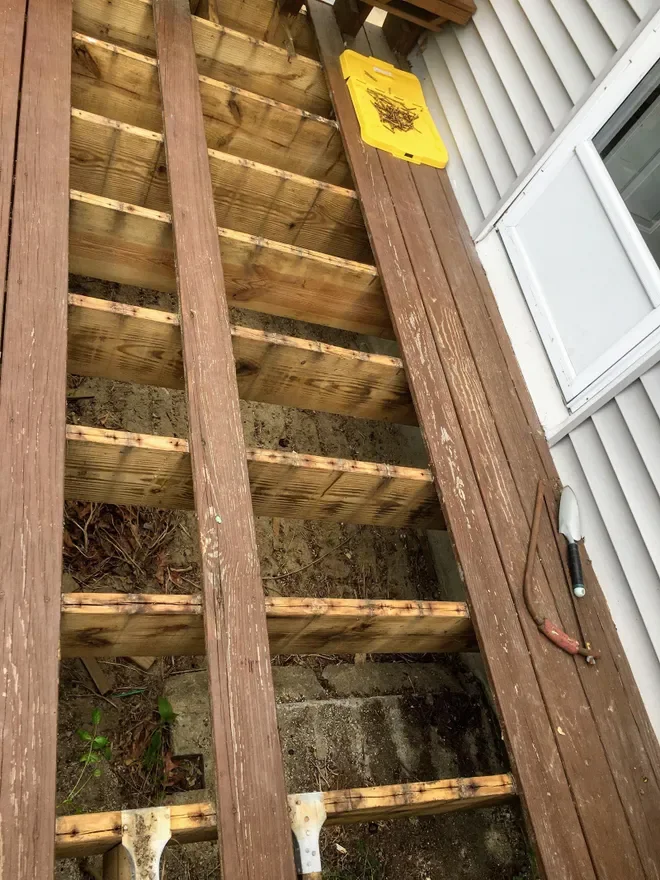
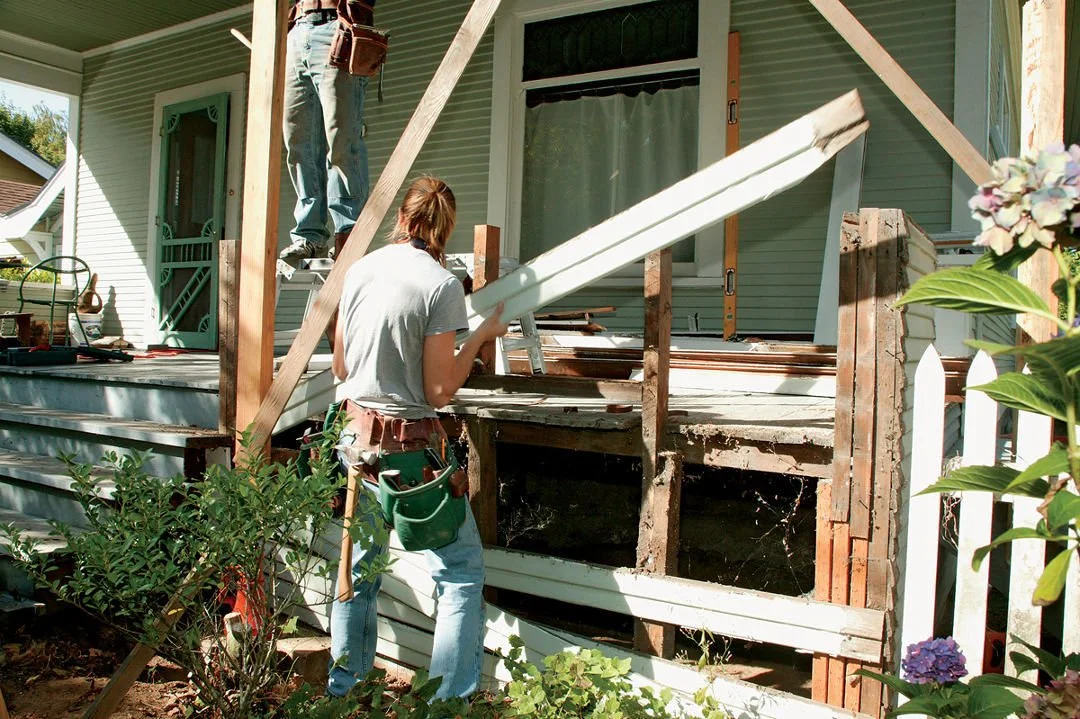
Sometimes what looks cosmetic is actually structural.
Common issues we see in 100-year-old homes:
Undersized beams
Joists resting directly in dirt or masonry pockets
Ledger boards improperly attached
Decades of water exposure weakening structural members
Porches often get “patched” instead of rebuilt properly — which leads to long-term sagging or unsafe conditions.
Correct rebuild approach:
Temporary structural support during demo
Replace compromised framing members
Proper ledger attachment
Modern structural reinforcement where needed
Maintain historic appearance while upgrading strength
4. Modern Materials Installed Incorrectly
Vinyl railings. PVC wraps. Composite decking.
Modern materials can be great — if installed correctly.
They fail when:
Installed over rotted framing
Trapping moisture against original wood
Mixed with incompatible materials
Installed without flashing
A historic porch can absolutely integrate modern durability — but it must respect building science.
Restore or Rebuild?
Not every porch needs full replacement.
In many Lambertville homes, we can:
Selectively replace column bases
Rebuild sections of flooring
Reinforce framing
Preserve original architectural details
The key is an honest structural evaluation — not a cosmetic patch.
How to Rebuild a Historic Porch Correctly
At Lambertville Home Restoration, our approach is simple:
Diagnose the true source of failure (not just what’s visible)
Stabilize the structure safely
Remove rot completely
Improve water management and drainage
Rebuild using appropriate materials
Preserve the historic character of the home
Done correctly, a rebuilt porch should last decades — not just five years.
Signs Your Porch May Need Attention
Soft spots in flooring
Columns sinking or separating
Peeling paint concentrated at base of posts
Sagging roofline
Railings that move when pushed
Water pooling after rain
If you notice one of these, it’s worth having it evaluated before the damage spreads.
Final Thoughts
Historic porches don’t fail because they’re old.
They fail because water wins when details are ignored.
With proper drainage, structural support, and careful craftsmanship, a porch built in 1905 can outlast many built in 2005.
If you own a historic home in Lambertville, Stockton, or surrounding Hunterdon County and want an honest assessment, we’re happy to take a look.
Preserve the character.
Rebuild it the right way.